
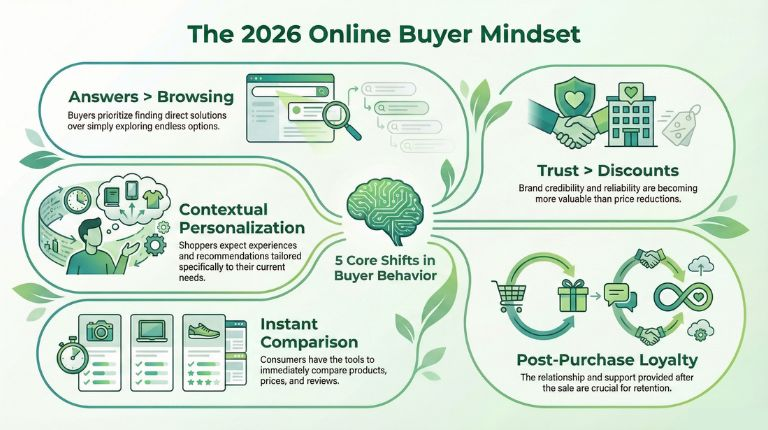
The shifts are:
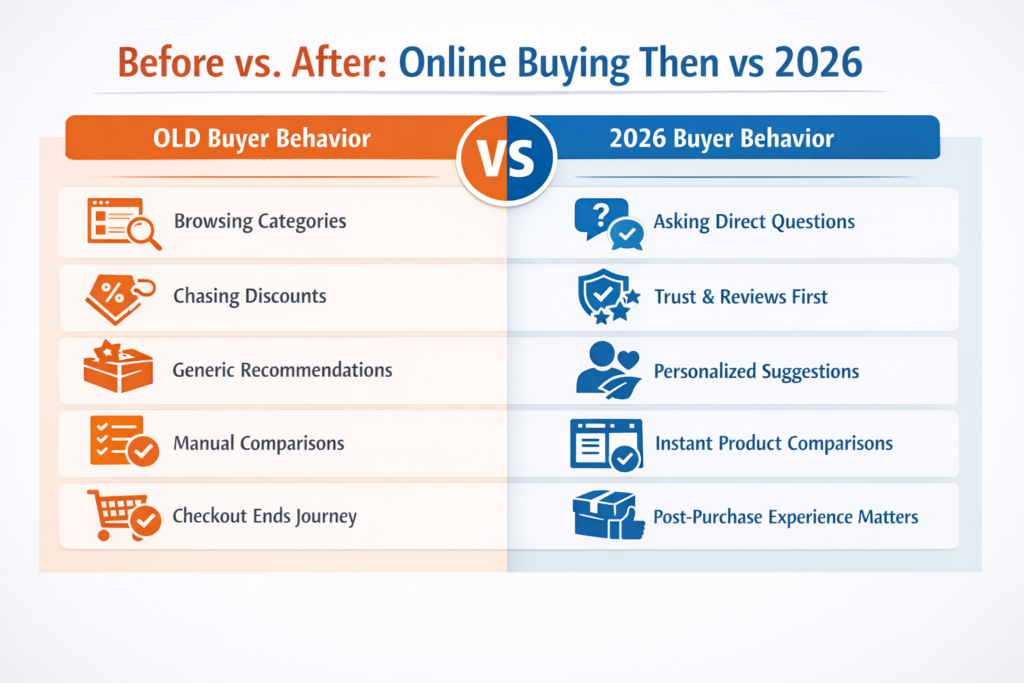
- Buyers Want Answers First, Not Exploration
- Trust Signals Now Matter More Than Discounts
- Buyers Expect Personalization Without Repetition
- Comparison Happens Instantly, Not Gradually
- Post-Purchase Experience Shapes the Next Purchase
It is impressive to see how quickly online shopping has continuously evolved, but 2026 marks a significant shift in buyer behavior from how they interacted with brands just a few years ago. The way people discover products, evaluate options, and make purchasing decisions has fundamentally changed.
What’s important is this: these shifts are not about platforms or tools. They are about expectations.
If your strategy still assumes buyers want to browse, compare endlessly, or “be persuaded,” you’ll see diminishing returns. Online buyer behavior 2026 is defined by speed, certainty, and low tolerance for friction.
Now, let’s consider “online buyer behavior 2026” as the focus mantra and explore the five biggest shifts shaping it with data-backed context you can actually use.
1. Buyers Want Answers First, Not Exploration
For years, ecommerce experiences were designed around discovery. Category pages, filters, endless scrolling, and related products were meant to keep users engaged.
In online buyer behavior 2026, that mindset no longer holds.
Today’s buyers arrive with a specific question, not a desire to explore. They want immediate clarity:
- “Is this right for me?”
- “Will it work in my situation?”
- “Is this better than what I’m using now?”
According to multiple UX studies, users form a decision impression in under 8 seconds on high-intent product pages. If those questions are not answered upfront, they leave.
This is why online shopping behavior changes are leaning heavily toward:
- Clear use-case explanations
- Prominent FAQs
- Comparison summaries above the fold
Creative Example:
A fitness equipment brand that moved its “Who this is for / who it’s not for” section above the product gallery saw a 19% lift in add-to-cart rate within six weeks.
This behavior pattern shows up repeatedly in ecommerce buyer behavior trends, where clarity consistently outperforms persuasion.
In short, online buyer behavior 2026 rewards brands that lead with answers instead of features.
2. Trust Signals Now Matter More Than Discounts
Discounts are still effective, but they are no longer the primary driver of conversions.
In online buyer behavior 2026, buyers are more skeptical, more informed, and far less patient. They don’t want the cheapest option. They want the safest decision.
Trust signals have moved from “nice to have” to conversion-critical:
- Verified reviews
- Real customer photos
- Clear return policies
- Transparent shipping timelines
A 2025 Baymard Institute study found that trust-related concerns, not price, caused 68% of cart abandonments.
This is one of the most notable changes in online shopping behavior we’ve seen. Buyers are actively scanning for reassurance before committing.
Creative Example:
A skincare brand replaced influencer quotes with verified customer reviews tied to skin type. The result:
- Bounce rate dropped by 14%
- Conversion rate increased by 11%
These patterns are repeatedly cited across ecommerce buyer behavior trends, particularly in high-consideration categories such as health, electronics, and B2B ecommerce.
In online buyer behavior 2026, trust reduces friction faster than promotions ever could.
3. Buyers Expect Personalization Without Repetition
Personalization used to mean “recommended products.” In 2026, that bar is far too low.
Modern buyers expect brands to remember context, not just behavior.
Key shifts in online buyer behavior 2026 include:
- Expecting product suggestions to reflect prior intent
- Frustration when asked the same questions repeatedly
- Expecting continuity across sessions and devices
According to Salesforce research, 73% of customers expect brands to understand their unique needs, yet only 49% feel that brands actually do.
This gap is driving major online shopping behavior changes, particularly around:
- Returning user experiences
- Assisted shopping flows
- AI-powered guidance
Creative Example:
A B2B ecommerce site introduced session-aware product guidance that remembered previously viewed specs. Buyers reached checkout 22% faster compared to new visitors.
This aligns closely with broader ecommerce buyer behavior trends, where personalization is shifting from novelty to baseline expectation.
In online buyer behavior 2026, personalization is not about delight. It’s about not annoying the buyer.
4. Comparison Happens Instantly, Not Gradually
Buyers still compare options, but how they do it has changed dramatically.
Instead of opening ten tabs, modern buyers expect comparisons to be done for them. This is one of the most visible online shopping behavior changes shaping conversions.
Key expectations include:
- Side-by-side comparisons
- “Best for” recommendations
- Clear differentiation summaries
Data from Google shows that product comparison queries have increased by over 40% year over year, indicating a growing demand for faster decision-making shortcuts.
Creative Example:
An electronics retailer added a simple “Compare with similar models” block directly on the PDP. The result:
- Higher engagement time
- 9% increase in completed purchases
This reflects a major shift in ecommerce buyer behavior trends, where buyers value decision efficiency over exploration.
In online buyer behavior 2026, the brand that simplifies comparison wins the sale.
5. Post-Purchase Experience Shapes the Next Purchase
The buying journey no longer ends at checkout.
One of the most underestimated aspects of online buyer behavior 2026 is how strongly post-purchase experience influences future decisions.
Buyers now evaluate brands based on:
- Order updates and communication
- Ease of returns
- Quality of post-purchase support
PwC reports that 32% of customers stop doing business with a brand after just one bad experience, even if they like the product.
This is a critical online shopping behavior change that many brands still overlook.
Creative Example:
A DTC brand that added proactive order status updates and a self-serve returns portal saw a 27% increase in repeat purchase rate within three months.
Across ecommerce buyer behavior trends, retention is increasingly driven by how “safe” and predictable the experience feels after the sale.
In online buyer behavior 2026, loyalty is built after payment, not before it.
Online Buyers Have Changed in 2026. The Smart Brands Already Have Too.
Taken together, these shifts paint a clear picture of the future of online shopping:
- Buyers want clarity over creativity
- Confidence over persuasion
- Efficiency over exploration
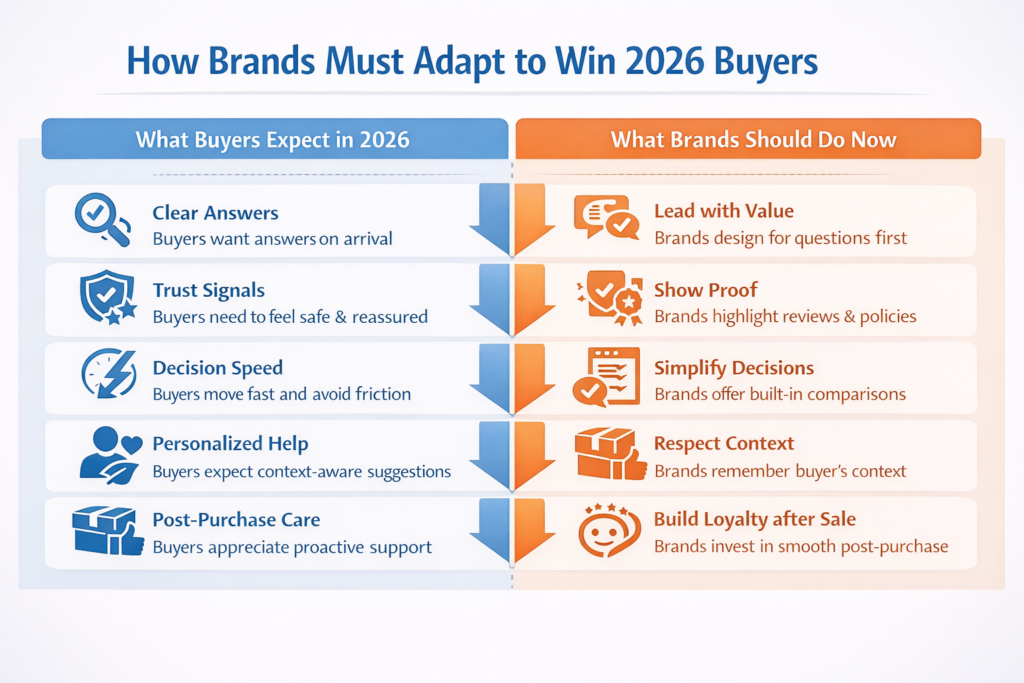
The brands that win in online buyer behavior 2026 will be those that:
- Design experiences around questions, not pages
- Remove doubt at every decision point
- Respect the buyer’s time and intelligence
As ecommerce buyer behavior trends continue to evolve, one thing remains consistent: buyers reward brands that make decisions easier.
Understanding these changes in online shopping behavior is no longer optional. It is the foundation of competitive advantage in the future of online shopping.
What People Frequently Ask
1. What is changing most in online buyer behavior in 2026?
The biggest change in online buyer behavior 2026 is the shift toward speed and certainty. Buyers want clear answers, visible trust signals, and fast comparisons instead of long browsing journeys. Decision-making is becoming more efficient and less exploratory.
2. Why are trust signals more important than discounts now?
Modern buyers are more informed and risk-aware. Reviews, return policies, and transparent shipping details reduce uncertainty more effectively than price cuts. This reflects broader online shopping behavior changes, where confidence matters more than savings.
3. How does personalization affect online buying decisions in 2026?
Personalization in 2026 is about remembering context, not just recommending products. Buyers expect brands to recognize their intent across sessions and avoid repetitive questions. This expectation is central to current ecommerce buyer behavior trends.
4. Are buyers still comparing products before purchasing?
Yes, but comparison happens much faster. Buyers expect side-by-side comparisons, summaries, and “best for” guidance directly on product pages. This is one of the most significant online shopping behavior changes influencing conversion rates.
5. How does post-purchase experience influence future buying?
Post-purchase experience plays a major role in repeat purchases. Clear communication, easy returns, and responsive support build trust and loyalty. In online buyer behavior 2026, the experience after checkout strongly affects whether buyers come back.